Fabric Sample Testing, Colour, and Conversations
Meeting the Participants
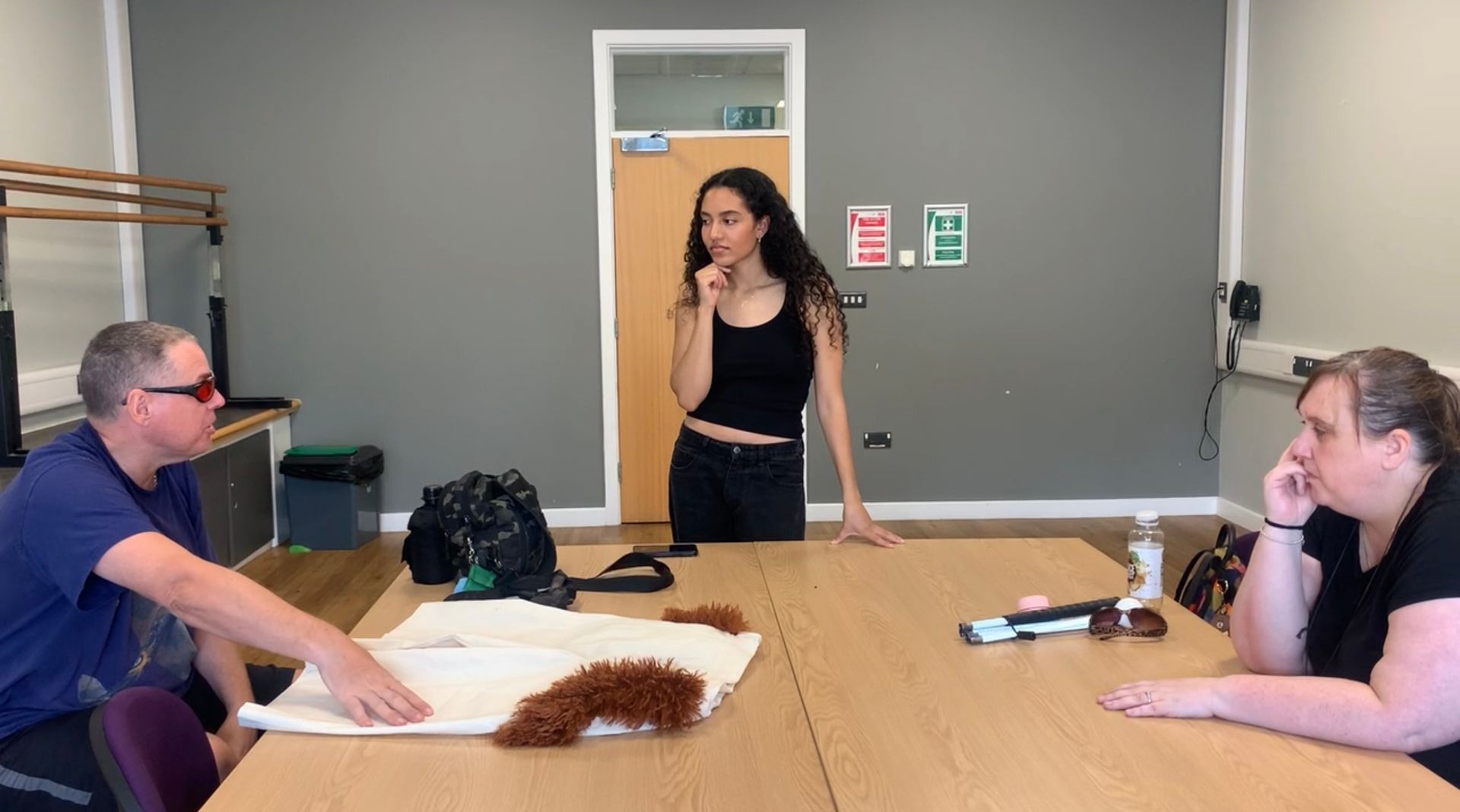
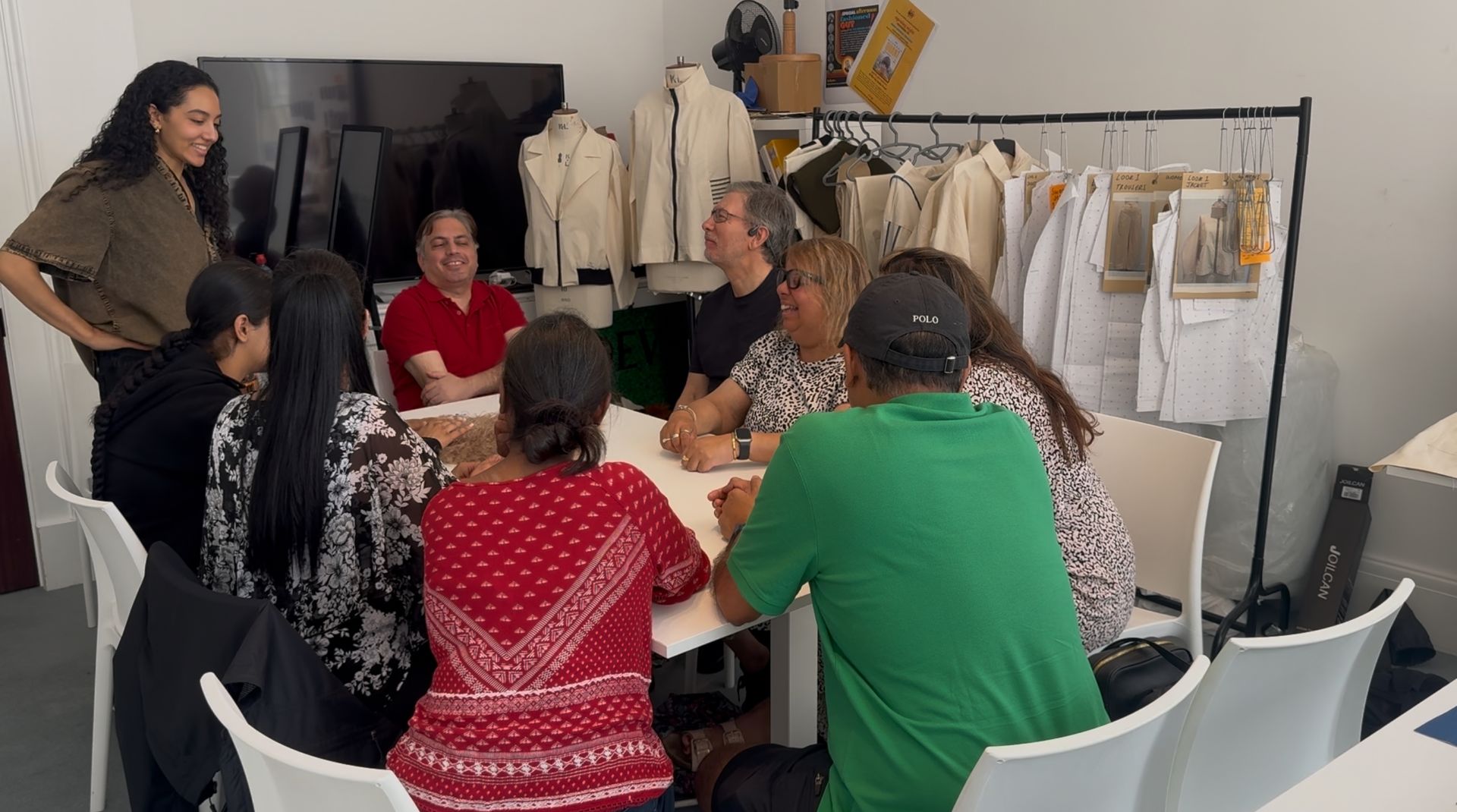
My first focus group took place on 31st July at the Royal National College (RNC) in Hereford. There, I met Gemma and Tim Morton, who took part in the session. Gemma has retinitis pigmentosa, while Tim has no colour vision and experiences light sensitivity.
Virtual Support From My Mentor
Lucy Edwards, my mentor during the third trimester of my MA course, joined via Google Meet to support the discussion and help guide the questions.
First Impressions of the Fabric Samples
We began by exploring the fabric samples I was considering for my MA collection, including faux fur, cotton, moleskin, wool, and leatherette.
• The burnt orange faux fur was a favourite for both participants, described as soft, warm, and perfect for winter, with a comforting tactile quality.
• The navy wool felt itchy and scratchy; they also mentioned that wool becomes heavy when wet, making it less suitable for an autumn/winter collection exposed to rain.
• The mustard yellow moleskin had a beautifully soft, premium texture, though if it got wet, the fabric could be damaged. Due to its structured nature, I planned to use it only for piping, not full garments.
• The royal blue leatherette received positive feedback; they liked that it’s waterproof and doesn’t require ironing, making it a practical and stylish option for outerwear.
Colour Decision-Making and Visual Accessibility
When deciding on colours, I was debating whether to pair royal blue with navy, or remove one and keep the auburn (burnt orange) for a cohesive palette with black. The burnt orange fur was especially popular, so I decided to keep that as a key texture.
Tim explained that he perceives colour through shade rather than hue, so simplifying the palette by removing either the navy or royal blue would make the contrast clearer. We concluded that black would act as a strong grounding tone, while burnt orange/auburn and navy provided a more balanced and tactilely consistent combination. Although Tim liked the royal blue, he felt the navy offered a more wearable, versatile option.
Testing Additional Fur Textures
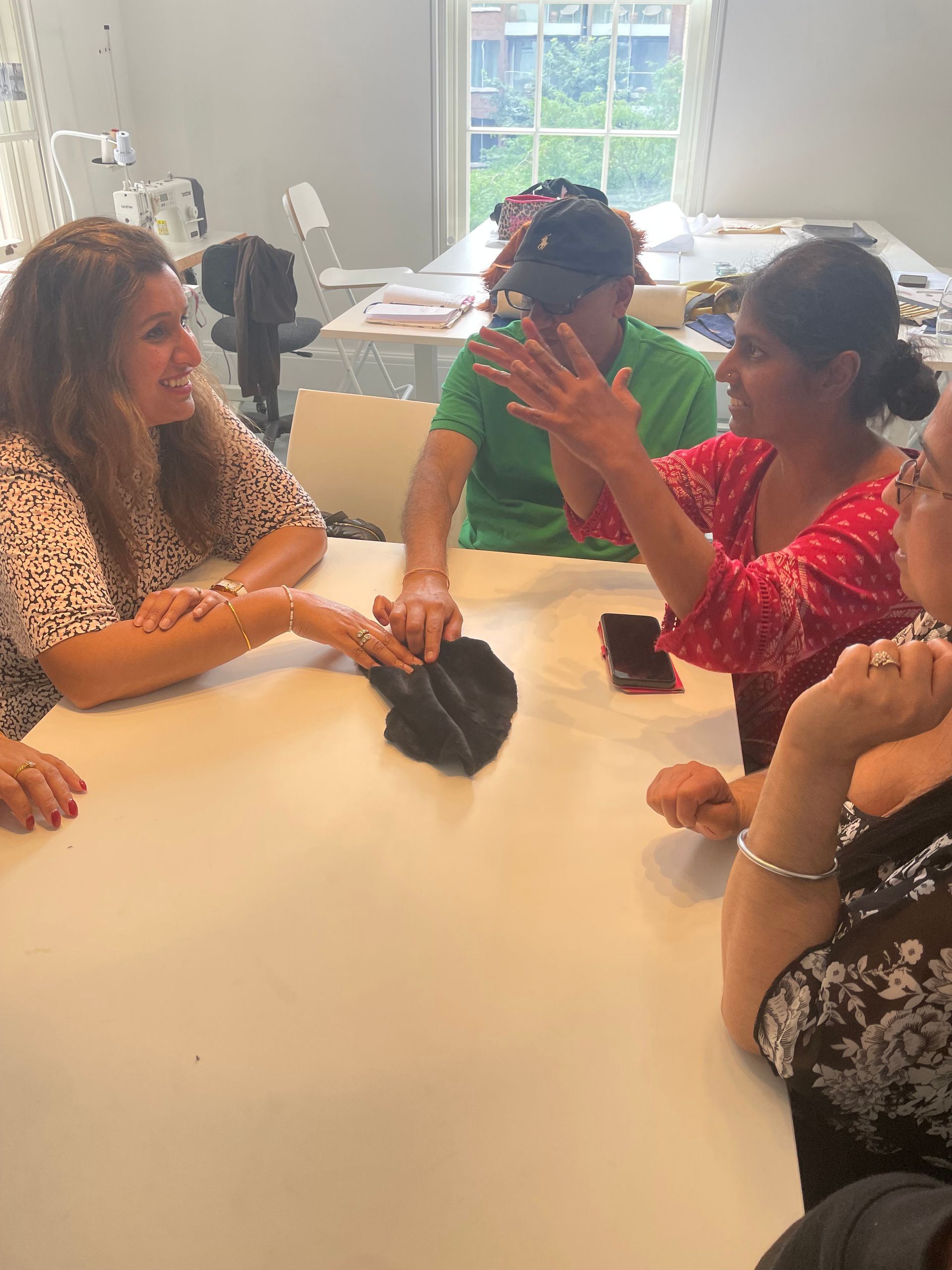
Next, we tested shaved sheep and lamb furs in light brown, dark brown, and black. Both liked the texture and variation in fur length, though they noted that the material malts easily, making it less practical for everyday wear.
Guiding Questions and Deeper Conversations
After discussing these fabrics, I asked questions such as:
• How does this feel on your skin?
• Would it keep you warm and comfortable?
• What do you think of the colour and texture?
These questions led to deeper conversations about weather durability and care, both important considerations for an autumn/winter collection.
Fabric Manipulation and Tactile Pocket Design
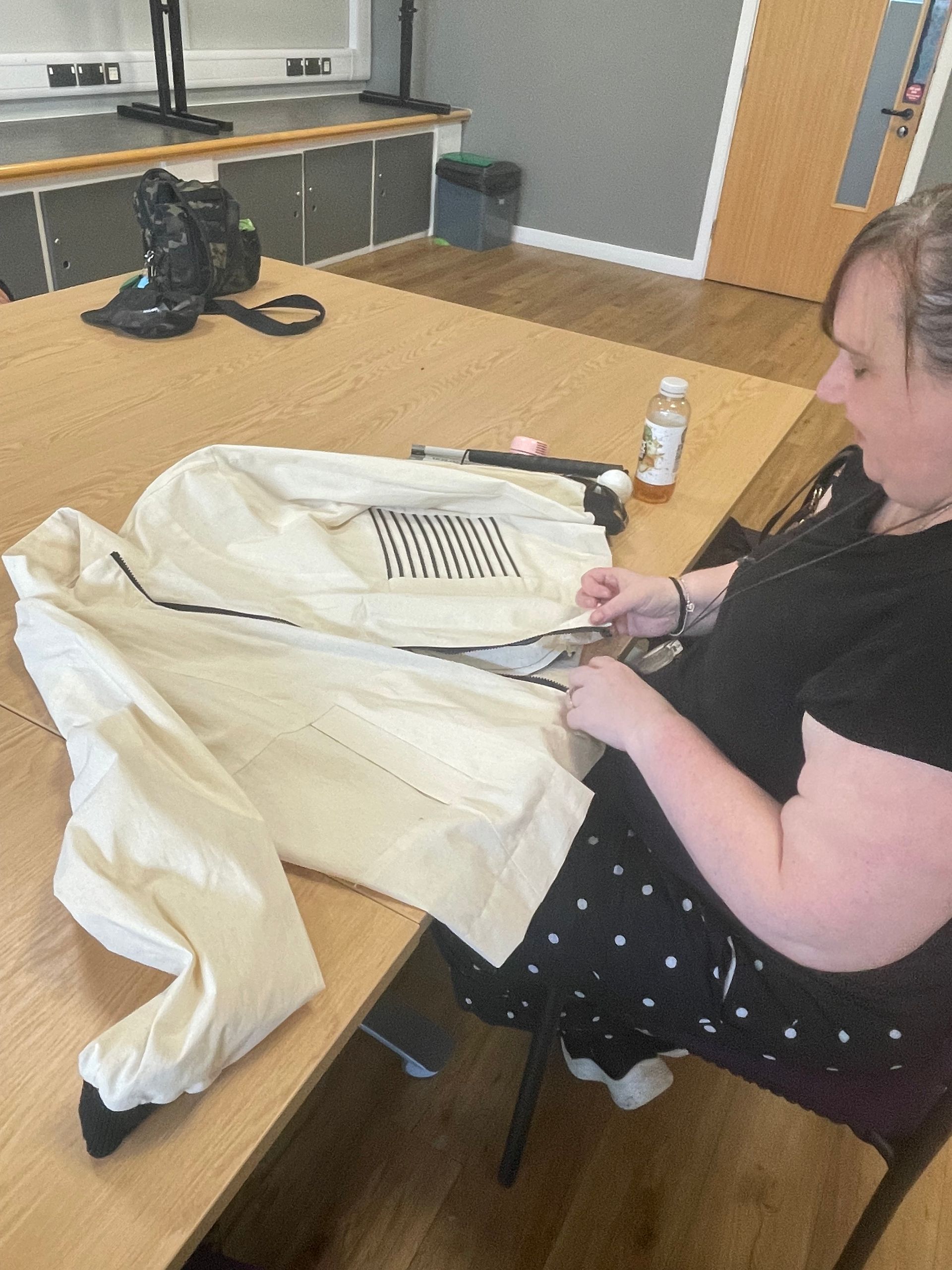
I also shared fabric manipulation samples, including pocket designs that used different textures for guidance. Some featured buttons or piping to indicate pocket placement, while others used straight moleskin piping to test tactile feedback.
Colour Preferences, Confidence, and Wearability
When discussing colour, I presented my proposed palette and asked about their preferences, which colours felt easiest to wear, which boosted confidence, and which offered practicality. We also talked about co-ord sets that simplify dressing by eliminating the need to match garments, creating trust between designer and wearer, a key goal of my brand.
Expanding Ideas Beyond Clothing
We explored how tactile guidance, such as piping around pockets, adds both functionality and visual design value, making it a signature detail of my brand. Some samples inspired ideas for other applications, for example using textured materials on bags or accessories instead of garments. These creative exchanges opened new perspectives on balancing comfort, texture, and practicality.
Reflecting on the Value of Honest Feedback
It was inspiring to work with participants who shared honest feedback and creative suggestions, exactly what I hoped to achieve with this focus group.
Toiles, Accessibility, Garment Construction, and Fit
Starting With Clothing Preferences
To start this section, I asked:
“What is your favourite piece of clothing, and why?”
Tim said boxer shorts, because they feel secure and close to the body. Gemma said fluffy socks for their warmth and comfort. This led to a wider discussion about clothing that feels comforting, empowering, and confidence-boosting, even inspiring ideas for future accessible underwear designs.
Women’s Tailored Bomber Jacket
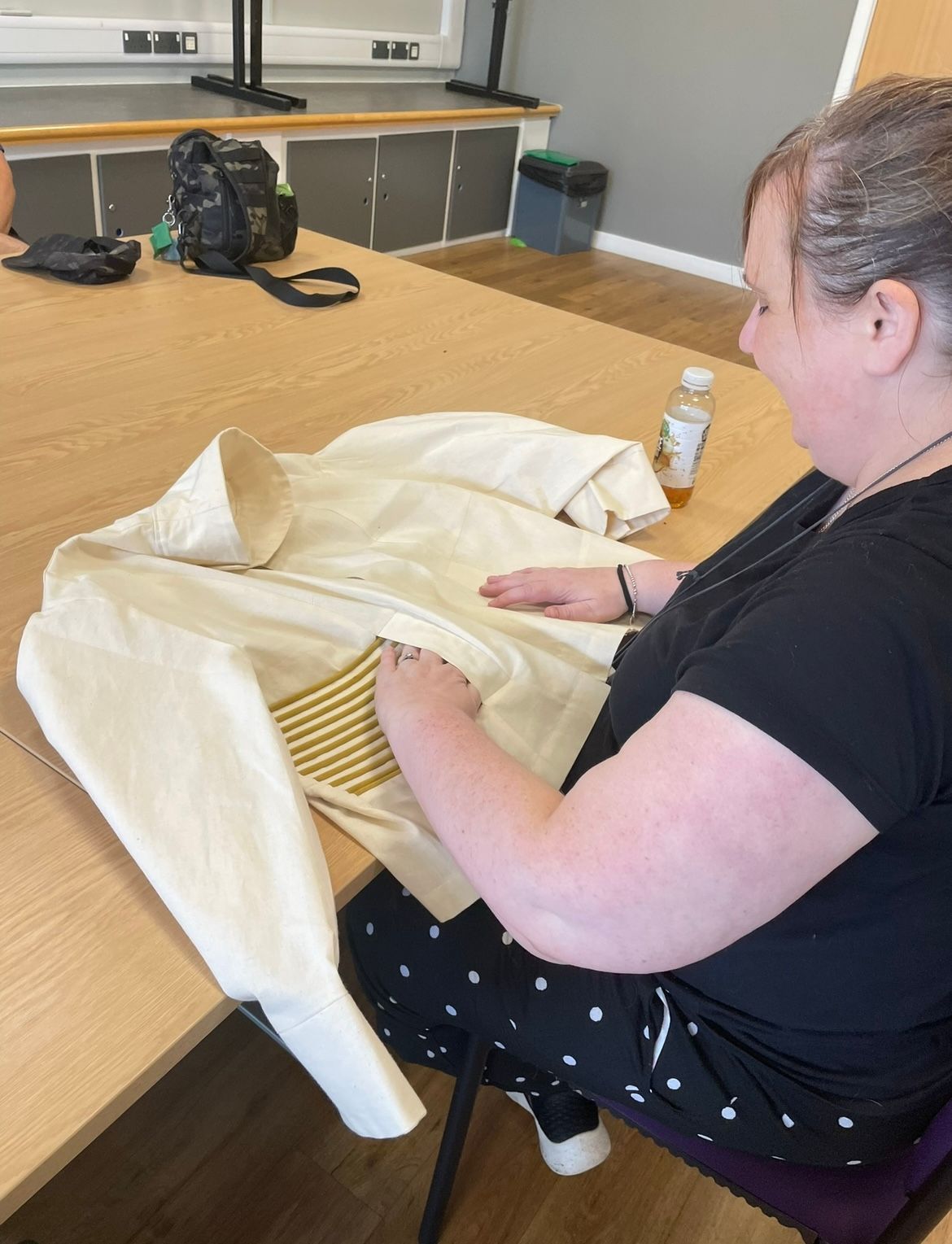
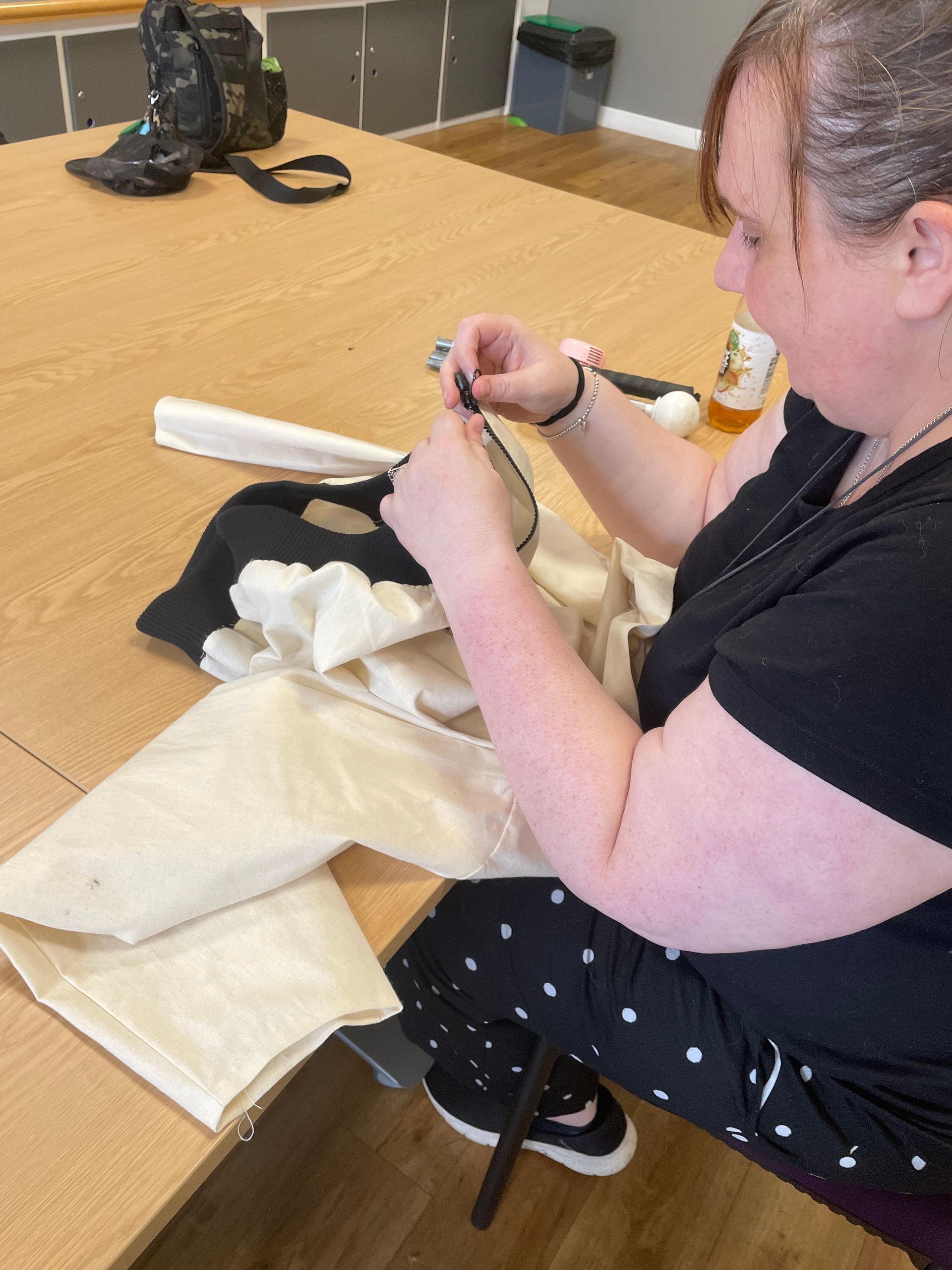
I first handed Gemma the women’s tailored bomber jacket toile, which featured a short magnetic zip. She said it might take some getting used to but liked the lapel collar. Tim also tried the jacket and fastened the magnetic zip easily.
Men’s Collared Jacket Toile
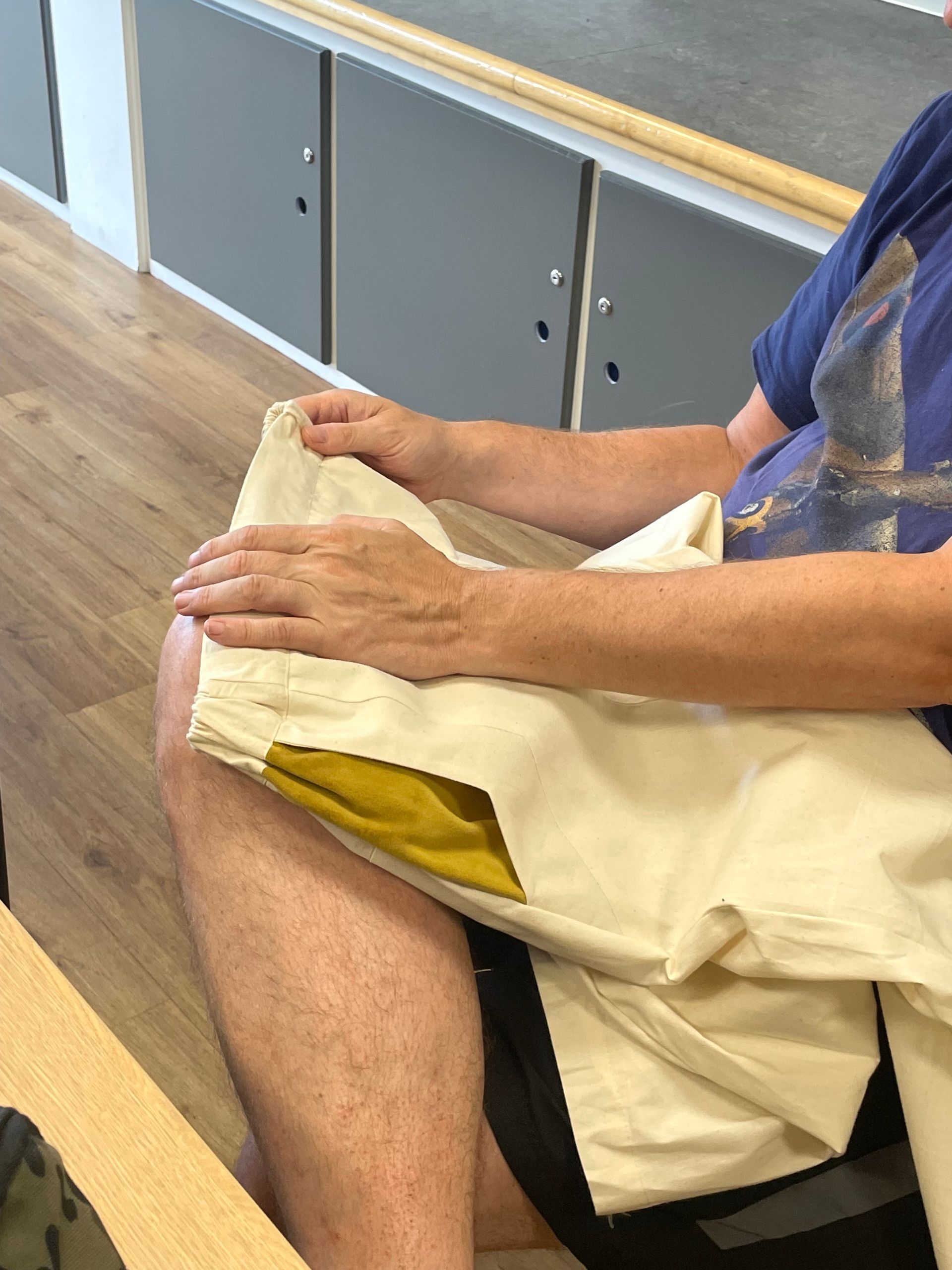
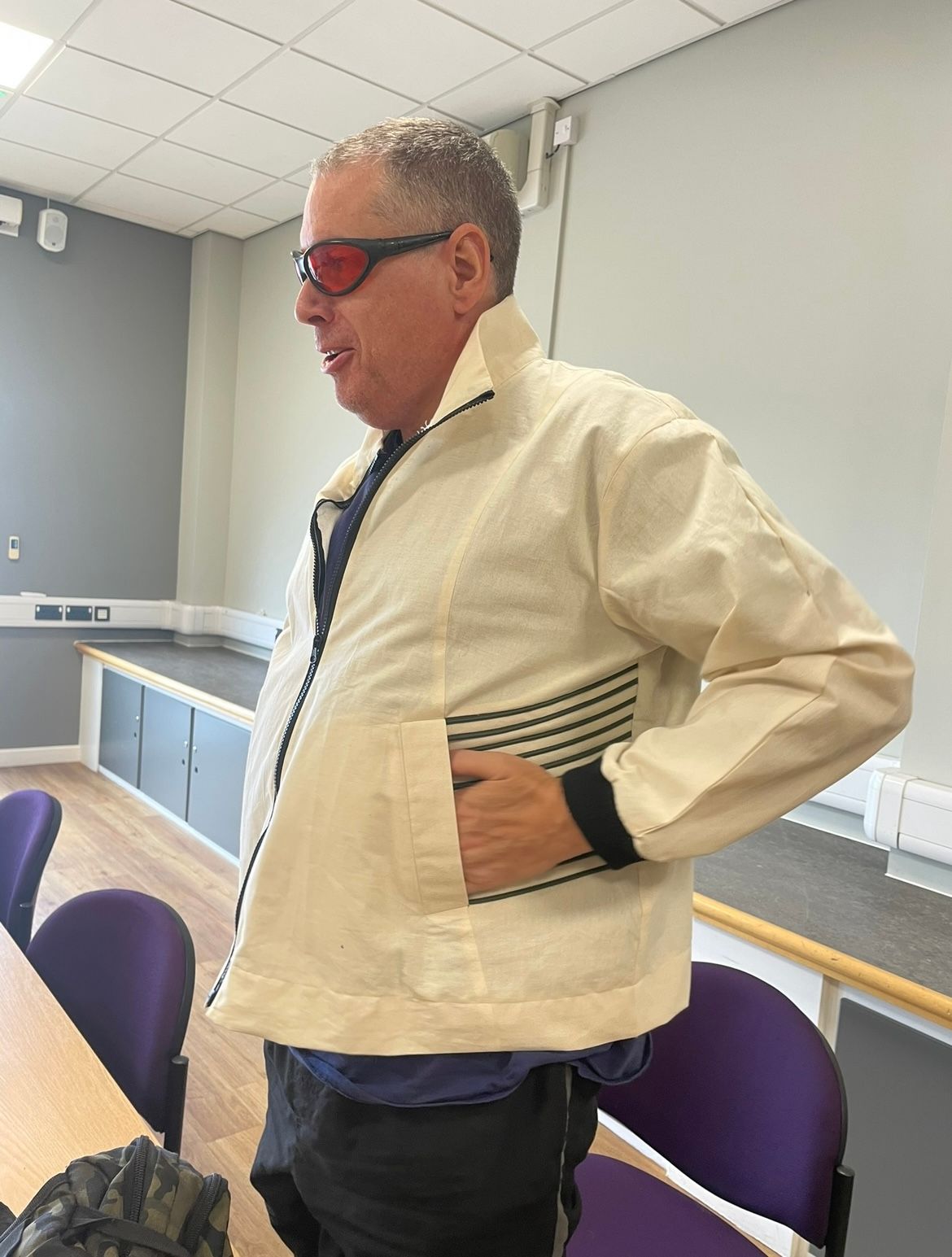
Next, Tim tried the men’s collared jacket toile, which featured leatherette piping leading into the pockets. He suggested adding a longer zip puller and proposed the idea of a furry inner pocket for warmth on cold days.
Women’s Collared Jacket: Piping, Magnets, and Design Identity
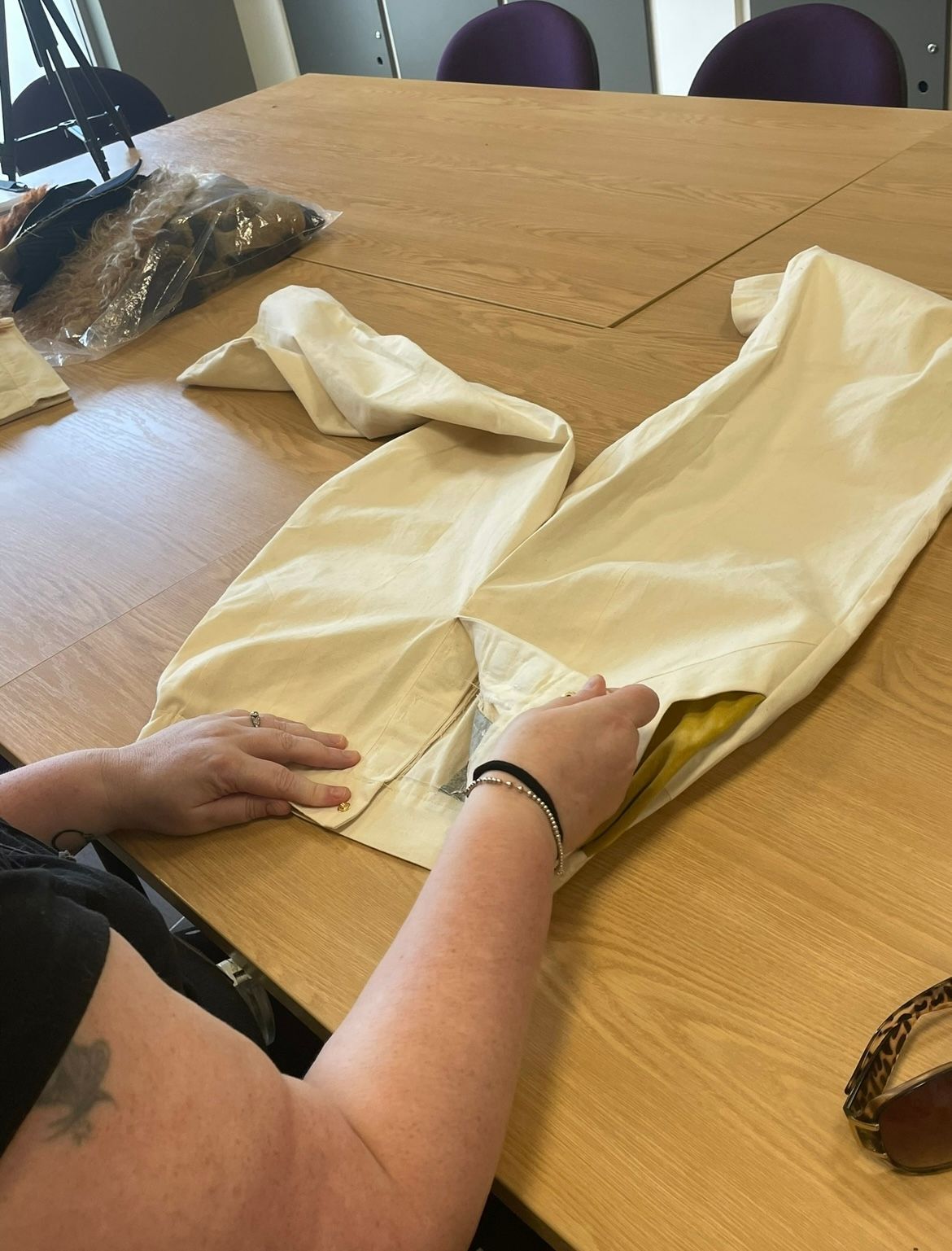
The women’s collared jacket toile followed; this design had magnetic closures at the collar and cuffs, a magnetic zip, and moleskin piping leading into the pockets. Gemma suggested that the piping could be slightly narrower while still effective as a guide. We discussed how the piping functions as both a tactile guide and a defining design feature of my brand.